Difonzo Therapy: Making Therapy Feel Like Understanding, Not Crisis
A campaign concept designed to help young adults better recognize emotional patterns, communication struggles, and relationship dynamics through accessible, emotionally resonant storytelling.

The challenge:Many young adults have learned to function while emotionally disconnected from themselves. Therapy is often perceived as intimidating or only necessary during crisis, creating distance between therapy services and those who need them most.
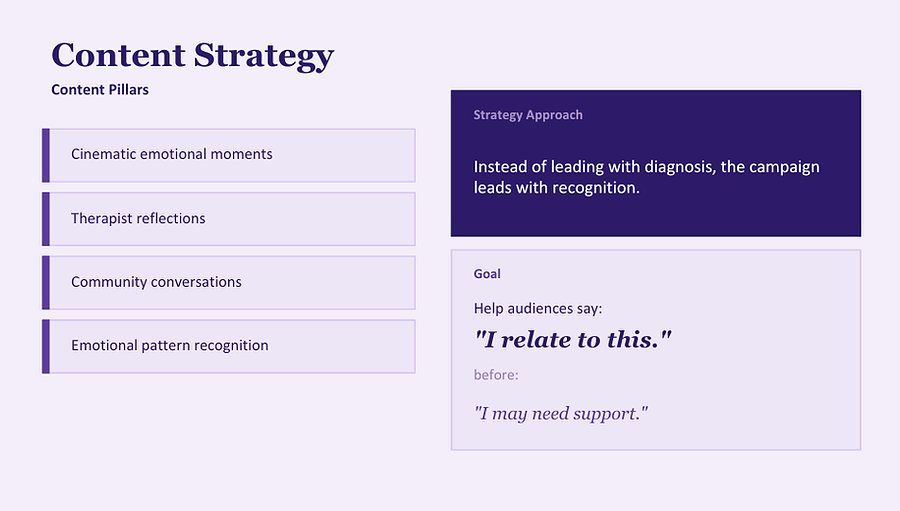
The insight:People emotionally engage faster through recognition than education. Audiences explore therapy when they feel understood, not analyzed. Relatable storytelling creates safer entry points into conversations about emotional awareness.
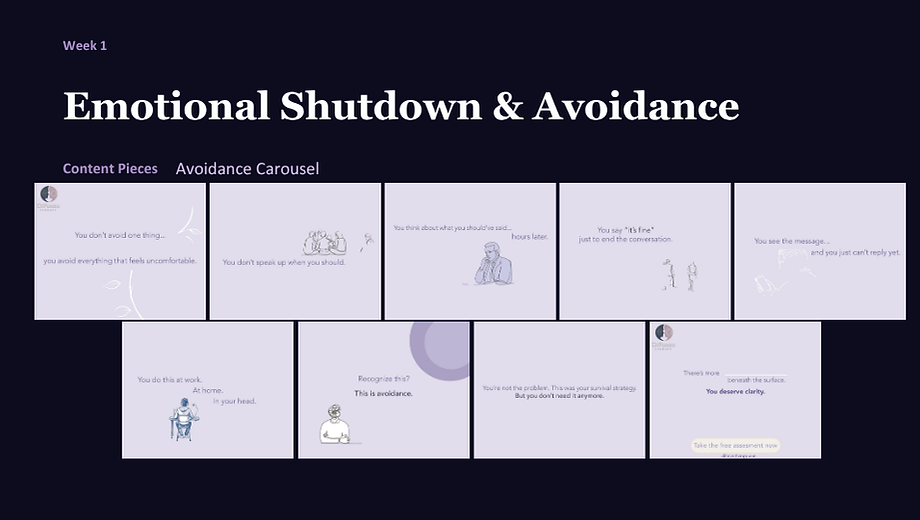
The strategy:Used cinematic storytelling and emotional pattern recognition to reposition therapy as emotional understanding rather than crisis intervention. Led with recognizable human behaviors like emotional shutdown, avoidance, and people-pleasing rather than clinical diagnosis.
The journey designed:Recognition → Reflection → Emotional Awareness → Consultation.
Stage by stage
What was built
- —Cinematic social content concepts and emotional scenario scripting
- —Storytelling-based carousel concepts and therapist reflection content
- —Audience-focused messaging across recognition, understanding, impact, and change
- —Assessment structure planning and emotionally driven CTA strategy
- —Visual identity exploration, moodboarding, and community conversation concepts
"Demonstrates how emotionally intelligent storytelling can reposition therapy from something intimidating into something culturally relevant and accessible — building emotional trust first so therapy feels like a space for clarity and reflection, not only crisis."